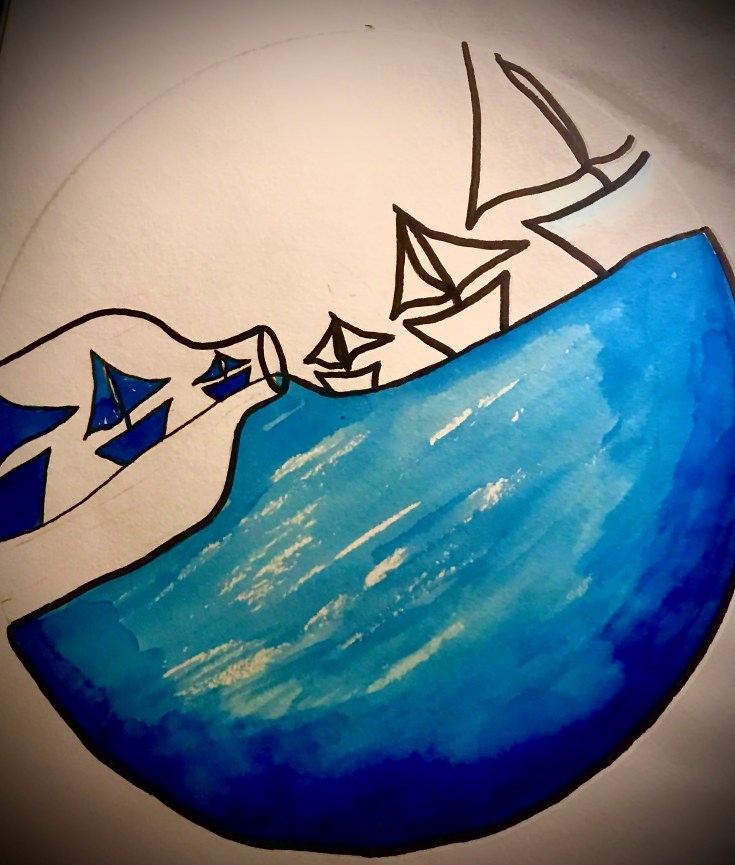
There are just some things in life that we will never be able to experience. Of course, we can read books, watch movies, and listen to stories in order to better understand how things used to be or how things could be in the future. But experiencing something first-hand is not the same thing, not at all. And that is not even the point because we do not have permission to truly access these experiences anyway. We can intellectualize these ideas, these stories…and we can turn our heads to see what lies behind or ahead of them—but there are limits to our imagination imposed by our generation. And these limits keep the ideas and the stories stagnant—only able to be gathered up from generation to generation, keepsakes of other times and other places.
The history of our ancestors and the dreams of the future from our youth give us lessons and hope; however, we need to be careful to not get stuck in these timelines. We must instead look toward our own generations purpose and fulfill our duty for it. To do this, we must pay attention to the struggles we face—to the obstacles put in front of us. If we understand this, then we can use our skills, our talents, and our intellect to help our generation move forward. There will always be things that we can imagine doing and things we would have done differently in retrospect…but there is also the reality of our current context, the reality of each generational timeframe.
We can saturate our lives with the ideas and stories all we want, but unless we experience something directly then it is all just acquired knowledge. As one who might analyze the entire French revolution line by line, but never fight in the trenches, never experience the trauma, never able to internalize the time and space. Knowledge cannot simply transfer to experience—knowledge is just an idea.
By focusing within our own generational time frame, we are able to pave the way for the next—contributing to its construction. Now some generations might have an easier time through their time frame and others might need to pay heavier fines such as a war, but in the end there is a natural hierarchy—each bringing new ideas, skills, and technologies. This is each generation’s duty. This is the perpetual motion of life. This is the consciousness of life itself.
In this way, nothing is random, nothing is coincidental and there is a natural interdependence occurring. I invite you to look at your own generation: What have you had to overcome? What lessons have you had to learn? Which direction is your soul being pulled? The answers to these questions manifest themselves in a variety of ways: maybe it is finding balance, maybe it is needing to make a sacrifice, maybe a commitment to the earth is required? Whatever is asked of us, if we work toward it, we will find peace. If we focus too much on judging the previous generation or trying to control the next, then a shadow side to life’s consciousness will be evoked and the natural order disrupted.
We are each designed to live in our own generational timeline, and when we accept that there are limits to each generation we will see more value in our current context and take more ownership of our responsibilities. Yes, we may feel close to the next generation, but we cannot expect to affect it. Letting go of our egos will help us to realize that we can’t know everything because we can’t experience everything—and this will help us to let go of judgement of what came before or what is to come.
Because, you see, it doesn’t matter what experience is required of us. What matters is that each generation fulfills their purpose so that the next generation can use the base constructed as a platform. Think of an electric circuit: fulfilling our part of this social movement ensures the continuity of the current…of society. And in the end, as each generation completes their duty, they add to the illumination of humanity as a whole.
Translated by: Nuray Narbay & Kristin Bond
Edited by: Kristin Bond
 Aya Sordum